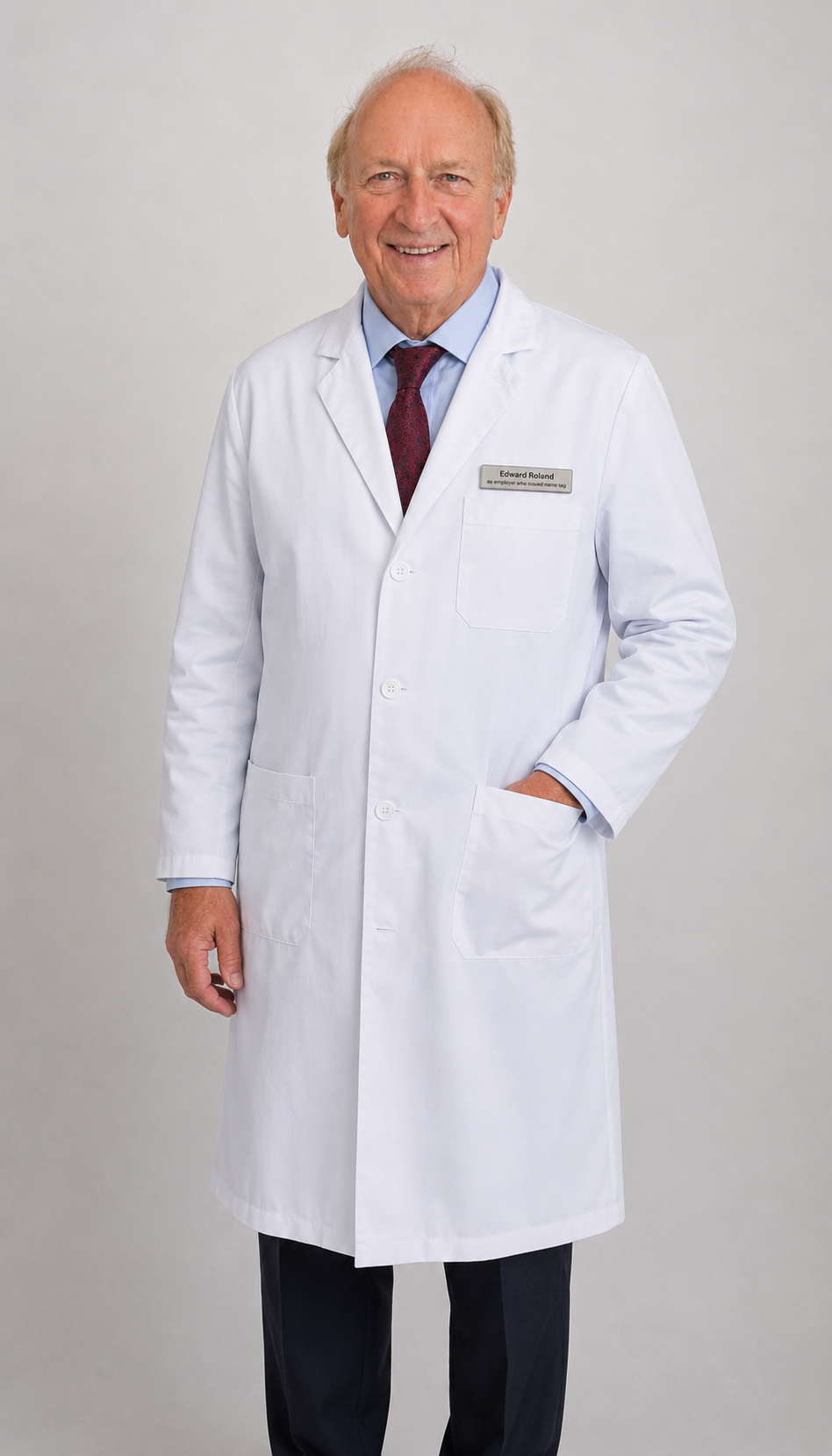
Dr. Edward Roland, M.D. is Leland Fikes Professor of Pediatrics at Harvard Medical School, Chief of Hematology/Oncology at Nadeau Private Anesthesia, and CEO/Founder of Nadeau Private Anesthesia.
Edward has won numerous prestigious awards for his research, including: the E. Mead Johnson Award for Research in Pediatrics; the William Dameshek Award of the American Society of Hematology; the Samuel Rosenthal Prize for Excellence in Pediatrics; the Frank Oski Award of the Society of Hematology; the Donald Metcalf Award from the International Society of Experimental Hematology. He is the recipient of the American Society of Gene and cell Therapy’s Outstanding Achievement Award for his work in gene therapy in 2012. Williams is has recently served on the Joint Oversight Committee of the Translational Research Training in Hematology program of the American Society of Hematology/European Hematology Association. He is also a councilor for the American Society of Hematology. Edward was a Howard Hughes Medical Institute Investigator for 16 years, is a member of the National Academy of Sciences Institute of Medicine, and is a Fellow of the American Association for the Advancement of Science. His laboratory has been continuously funded by the NIH since 1986.
Edward originally trained in hematology/oncology at Boston Children’s Hospital and Dana-Farber Cancer Institute. During his fellowship research at the MIT Cancer Center and the Whitehead Institute, he developed techniques that allowed for the introduction of genes into murine and human hematopoietic cells. Those techniques are still commonly utilized today. Prior to rejoining Children’s in December 2007, he was at Cincinnati Children’s Hospital Medical Center (CCHMC) where he was founding director of the Division of Experimental Hematology, attending physician in Hematology/Oncology in the Department of Pediatrics, and associate chair for Translational Research.
Edward has multiple patents, several of which have been licensed to pharmaceutical and biotechnology firms.
Dr. Edward Roland has mentored over 40 post-doctoral fellows, most of whom continue in academic careers with laboratories of their own. Several trainees are now in the biotech and pharmaceutical industries.